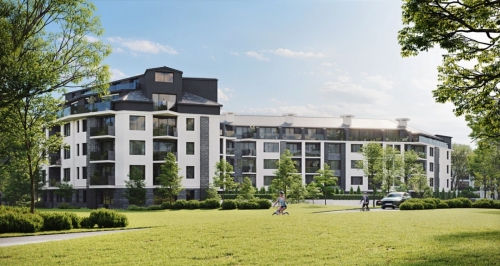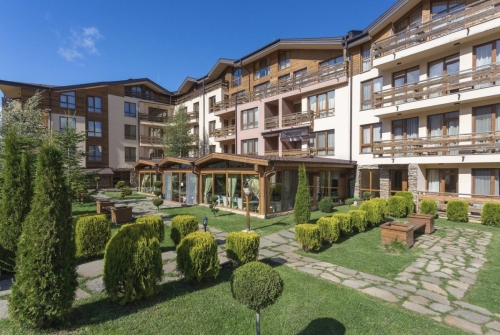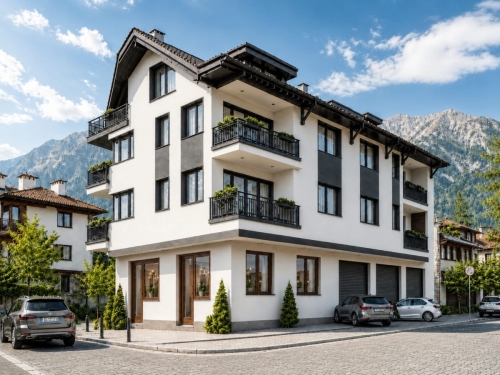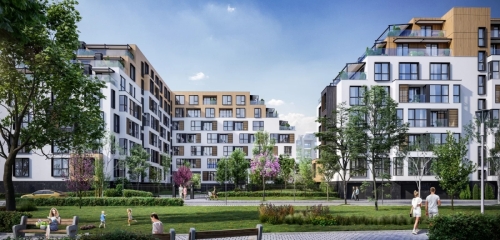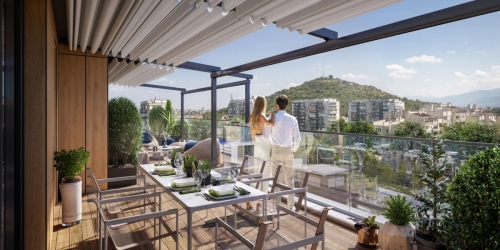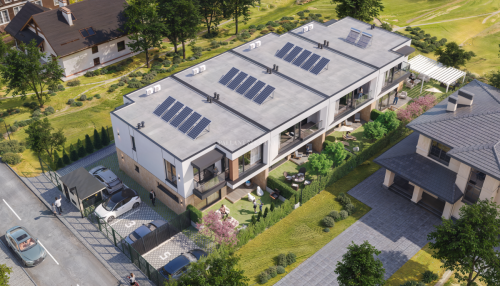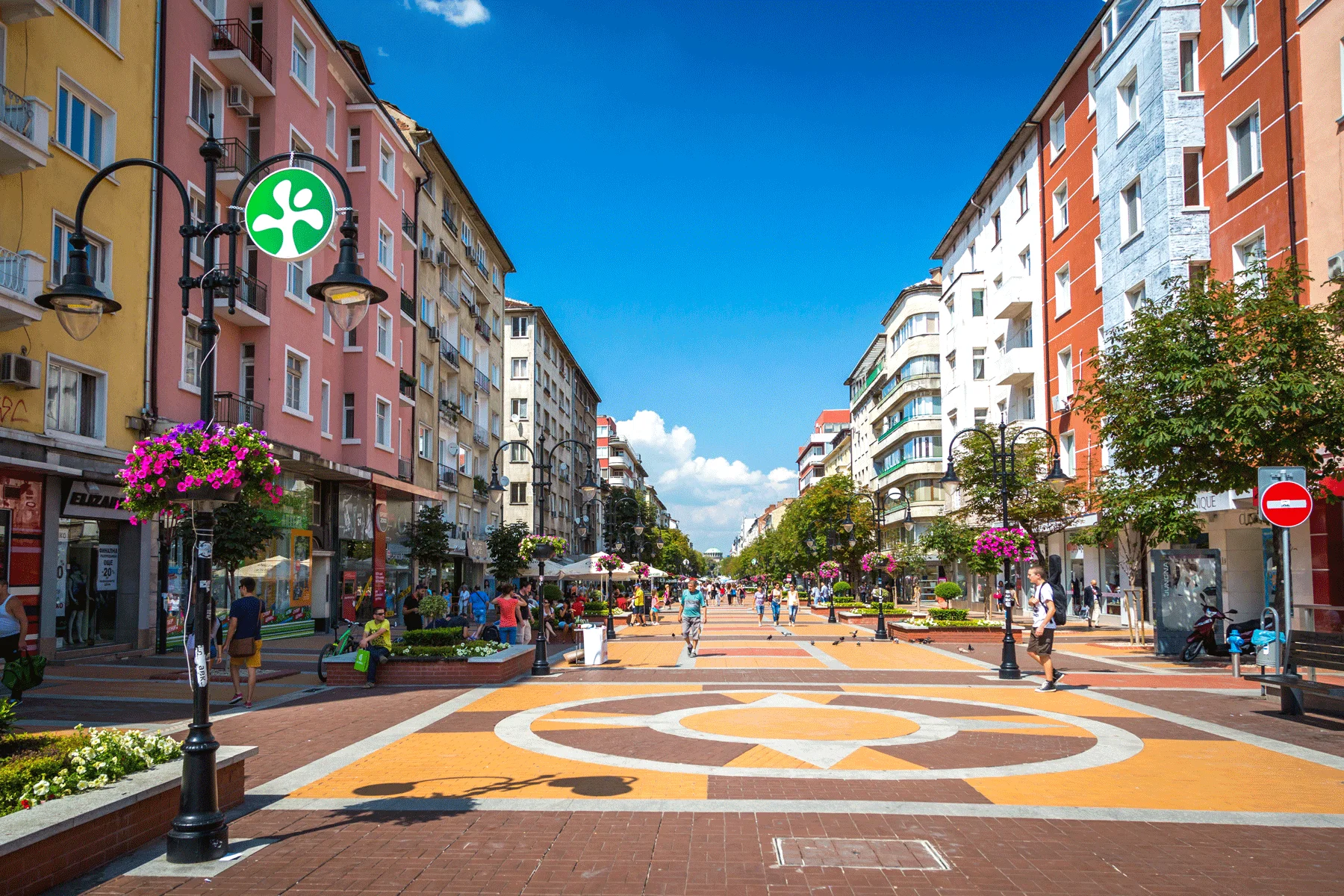
Sofia — the capital of Bulgaria and one of Europe’s dynamically developing cities. This city attracts investors and those seeking a profitable real estate investment. Buying an apartment, house, or property in Sofia offers the opportunity to live in the heart of the country’s cultural, business, and educational life, while also generating a stable rental income.
Why Invest in Real Estate in Sofia?
Capital Status
Sofia is Bulgaria’s economic and cultural hub. It hosts major companies, universities, theaters, and museums, making the city attractive for living and working.
Profitable Investment
Real estate in Sofia enjoys consistent demand for both rental and sale. Purchasing an apartment or property here provides the opportunity to earn passive income or increase capital through rising property values.
Diverse Options
Sofia offers a wide range of real estate, from budget apartments in new residential complexes to luxury villas in prestigious neighborhoods.
Affordable Prices
Compared to other European capitals, real estate prices in Sofia remain affordable. An apartment in the city can be bought for 90,000–120,000 euros, while a house or villa ranges from 200,000–500,000 euros.
Relocating to Bulgaria
For foreigners, buying property in Sofia is an opportunity to obtain a residence permit in Bulgaria. The city offers a high quality of life and wide career growth opportunities.
How Can Foreigners Buy Real Estate in Sofia?
The process of purchasing property in Bulgaria for foreigners is simple and transparent. It’s enough to contact a trusted real estate agency, which will help you find a suitable property, finalize the transaction, and prepare the documents. It’s important to note that foreigners have the same rights as Bulgarian citizens when buying housing.
Prime Neighborhoods in Sofia
Baniшora
Baniшora is a district located in the northwest part of the city, near the Central Railway Station and Central Bus Station. It’s an old working-class neighborhood where residential buildings consist of blocks constructed using monolithic, brick-panel, and panel technologies. The district has a very advantageous location near the city center, with major transport arteries passing through it, defining its boundaries: Boulevard Sliwnitsa to the south and Boulevard Maria Luisa, leading to the Nadezhda district. The Nadezhda trolleybus depot in Sofia is located within the district. It is served by the second metro diameter, eight tram lines, four trolleybus lines, and fifteen bus lines. The area hosts four hospitals, several regional medical centers (DKTs), and the Central Sofia Prison.
Belite Brezi
Belite Brezi is located in the southwest part of Sofia. The district has a triangular shape and lies between two major boulevards—Bulgaria and Gotse Delchev—and Kjustendil Street, which runs along the Boyanska River. It features a unique mix of old and new construction: the old includes single-family homes and brick buildings from the 1980s, located in the southern part of the district near Bulgaria and Gotse Delchev Boulevards, while new construction is concentrated on streets like Nishava, Haydushka Gora, Lerin, and Smrch. The area has a well-developed road infrastructure, and transport connections include bus, trolleybus, and tram lines, ensuring quick access to the city center and other parts of the capital. The district will be served by the future third metro line with a station at Ruchey Square. Neighboring districts include Strelbishte, Krasno Selo, and Hipodruma.
Benkovski
Benkovski is a district located on the northern outskirts of the city. It was formed in 1954 by merging the villages of Birimirtsi and Obradovtsi, 5 km north of Sofia’s center. It borders the villages of Chepintsi and Negovan to the east, Iliyantsi and Nadezhda to the west, Kubratovo village to the north, and Orlandovtsi and Malashevtsi to the south. The district is small and primarily consists of single-family homes and a few panel blocks built after the 1970s. The northern part of the district is crossed by Sofia’s northern tangent, and Boulevard Lazar Mihaylov, which serves as the route for all public transport connecting the district and the villages beyond it, passes through it.
Borovo
Borovo is located in the southwest part of the capital, at the foot of Vitosha Mountain and the Boyana district. It lies between Bulgaria Boulevard, Todor Kableshkov Street, General Stefan Toshev Street, Doyran Street, and Gotse Delchev Boulevard, bordering the Belite Brezi and Krasno Selo districts. In the early 1960s, construction of the first brick and panel blocks in the district began. Borovo is one of the oldest and most preferred southern neighborhoods in Sofia for living. The district has developed infrastructure, preserved greenery, and clean air. Boulevard Bulgaria ensures convenient and quick access to the city center, while transport services include one tram line, two trolleybus lines, and five bus lines.
Boyana
Boyana is located 7 km south of the city center, above the Sofia Plain. It was once the suburban residence of Sebastokrator Kaloyan, part of which included the Boyana Church—the largest cultural and spiritual treasure not only for Boyana but for all Bulgarians. Aristocrats of the Second Bulgarian Empire lived in the area. Boyana lost its village status in 1961, although it was annexed to the Greater Sofia Municipality in 1938. Today, the district’s development predominantly features new, luxurious single-family homes with beautifully landscaped yards. Some new residential buildings are organized into gated complexes with controlled access, 24-hour security, and video surveillance. Land prices here are steadily rising, driving trends toward exceptionally high-quality and luxurious construction aimed at wealthier clients. Boulevard Bulgaria provides a quick connection from Boyana to the city center. The district houses the governmental residence, where the president, vice president, and chairman of the National Assembly live. The National Historical Museum, located in the former House No. 1 of the governmental residence, is also situated in Boyana. Beyond these landmarks, the district offers much more: not only meadows but entire forests and wonderful spots for relaxation in both winter and summer. It’s no surprise that it is considered one of Sofia’s most prestigious southern suburban districts and a preferred residence for foreigners and people of high social status. Despite the advantages and challenges of living in a remote area—winter lasts nine months, and if it’s snowy, the challenges are numerous—love for the mountains often prevails, and residents see only the beauty, greenery, birds around, and clean air; everything else is manageable.
Bukston
Bukston is one of Sofia’s districts, now merged with Pavlovo. It lies south of Krasno Selo, adjacent to one of Sofia’s major transport arteries—Tsar Boris III Boulevard. Its name comes from the surname of the Bukston brothers, British public figures who supported the Bulgarian cause during World War I. The main road connection is Bukston Brothers Boulevard. During World War II, uniform two-story houses for German officers and a building that housed the headquarters of the German army in Bulgaria (now a school) were constructed here. The district’s infrastructure is well-developed and tailored to residents’ needs. It’s characterized by panel construction from the late 1960s and brick-panel construction from the 1980s. In recent years, new construction has begun, contributing to the district’s modern and contemporary appearance with clean, well-maintained inter-block spaces. There are many playgrounds, gardens, and relaxation areas. Bukston is a preferred place to live and has significant investment potential for rental purposes. It boasts good transport infrastructure, including three tram lines, two trolleybus lines, and five bus lines.
Vitosha
Vitosha is a former villa zone on the outskirts of Sofia, now a residential district located between the Yuzina area near the Ring Road and the foot of Vitosha Mountain to the south, the Sofia Zoo, Hunting Park, and Dianaabad district to the north, Nikola Gabrovski Boulevard to the east, and Krastova Vada district to the west. Between it and the Student City are residences of the Diplomatic Corps. As Sofia expanded, Vitosha’s boundaries also shifted, now encompassing the area between G. M. Dimitrov Boulevard and Student City. Initially developed with villas in the 1960s, its appeal for living grew in the 1980s and 1990s, with the construction of the first high-rise cooperatives and blocks. In the early 21st century, intensive development began with 4–6-story buildings and several single-family homes, predominantly featuring large apartments. Gated complexes also exist here. The district’s infrastructure reflects its original purpose as a villa zone, with Simeonovo Highway as the main transport artery. Near the zoo, there’s a connection to the Hladilnika district, but poor road maintenance due to numerous construction projects, a concrete node, and warehouse, along with the lack of pedestrian sidewalks, significantly reduces traffic capacity. Among Vitosha’s drawbacks are the absence of a clear concept for developing the residential zone—no children’s or youth areas for play, sports, education, or entertainment—and a significant shortage of social spaces for young families, despite most buildings’ layouts being designed for this demographic. These issues are often overlooked by people seeking proximity to the mountains, drawn by the area’s closeness to the city and modern residential developments, giving the district a more contemporary look.
Gevgelijski District
Gevgelijski is a small district in the northwest part of the city, founded after World War I by Bulgarian refugees from the South Macedonian town of Gevgelija. A railway line separates the district from Western Park, while Vardar Boulevard and another railway line separate it from the Sveta Troitsa district, and Tsaritsa Yoanna Boulevard from Western Park. Construction in the Gevgelijski district is predominantly panel-based, carried out from the late 1960s to the late 1980s, with a few EPK blocks, small brick blocks from the 1960s, and new residential buildings. The district has no schools or kindergartens. The main transport artery is Tsaritsa Yoanna Boulevard, along which a bus servicing the district operates. At the district’s edge, the first metro diameter line runs, with the Vardar metro station serving it.
Geo Milev
The district is named after the renowned Bulgarian poet and publicist Geo Milev. Located about 3 km from the center, it is connected to it via Tsarigradsko Shose Boulevard and Shipchenski Pass Boulevard, which merges into Tsar Ivan Asen Street. It borders the Reduta, Slatina, Iztok, Yavorov, and Poduyane districts. Geo Milev is bordered to the west by Sitnyakovo Boulevard, to the east by Kostya Lulchev and Hristo Chernopeev Streets, to the north by Geo Milev Park, and to the south by Tsarigradsko Shose Boulevard. It is primarily built with brick buildings, but there is also significant new construction. The district hosts the Ministry of Foreign Affairs building, Universiade Hall, Geo Milev Park, Sitnyakovo Market, several embassies, and numerous restaurants, cafés, pizzerias, bars, hotels, pastry shops, and green spaces. Public transport includes one tram line, four trolleybus lines, and many bus lines. Geo Milev began development in the 1930s and is now one of Sofia’s fastest-growing modern districts. Property and rental prices here are among the highest in the city.
Gotse Delchev
Gotse Delchev is a southern district named after the Bulgarian national hero Gotse Delchev, combining the former districts of Emil Markov and Motopista. It borders Bulgaria and Gotse Delchev Boulevards and the Strelbishte and Borovo districts. Gotse Delchev is a well-organized district with childcare facilities, two schools, a polyclinic, commercial establishments, and is historically known for the construction of the Vitosha Motorbike Track, which has been a semi-ruined private property since 2006. Between the track and Triaditsa Sports Hall, mostly new buildings have been constructed, giving the district a modern appearance. Like neighboring districts, Gotse Delchev features a mix of new and old construction: the first panel and brick blocks were built in the late 1960s, followed by EPK construction, and after 1990, the district became highly attractive for construction firms and investors. Many new buildings modernizing its appearance have been built, mainly along Deyan Belishki, Silivria, Kostenski Waterfall, and Slavovitsa Streets. Bus and trolleybus transport connect Gotse Delchev to the city center and surrounding districts.
Dianaabad
The Dianaabad district is located southeast of the capital’s center. To the north, it borders Izgrev, to the east, Dragan Tsankov Boulevard separates it from Iztok and Musagenitsa, to the south lies Student City, and to the west is Hunting Park. The complex has abundant greenery, attributed to its development over 30 years ago. Its former name was Chervena Zvezda (Red Star). In summer, the open-air Diana pool, part of the namesake sports complex including a hotel and tennis courts, becomes a cooling center. The district features a variety of buildings: panel residential buildings predominate in the southern part, alongside several high-rise EPK buildings and small 5-story brick blocks with a single entrance. Transport services are provided by several bus lines.
Dragalevtsi
This district is located at the foot of Vitosha Mountain but, unlike Boyana, is less shaded, making it more pleasant in summer—cool yet sunny. Dragalevtsi enjoys a reputation as one of Sofia’s most prestigious and expensive districts, and living there is a true privilege, provided you’re willing to compromise on the lack of a sewer system. Its proximity to the city center (7 km), the mountain, excellent views, and connectivity make it extremely attractive for living, preferred by the business elite and people of high social status. The main transport link to the city center is Cherni Vrah Boulevard. A two-seater cable car connects the district to Vitosha’s ski slopes.
Druzhba
In 1947, residential blocks were built for workers of enterprises in the industrial zone near Iskur Station, marking the beginning of the future Druzhba residential complex. The district is divided into two areas: Druzhba 1—the older part, home to most public institutions, the district market, and Ezero Park, Sofia’s largest lake in its residential area—and Druzhba 2—the newer part, offering more room for expansion. Industrial zones are mostly located to the north and east, primarily around Iskur Station. Older construction is predominantly panel and EPK, but near Tsarigradsko Shose, new-type blocks are being built, with the largest group in the Tsarigradski Complex. The district’s transport infrastructure is well-developed, with three road connections via Tsarigradsko Shose: Hristofor Kolumb Boulevard, Copenhagen Boulevard, and Dimitar Peshev Street. Heavy traffic to and from the airport is eased by an overpass crossing Druzhba 1 via Brussels Boulevard. Transport services include six bus lines, two tram lines, and two trolleybus lines. The district has two metro stations on the second diameter—Druzhba and Iskursko Shose. It features numerous shops, including major retail chains, as well as nine schools and nine kindergartens.
Derventitsa
Derventitsa is a small district southeast of Sofia’s center, a village until 1961, when it was annexed as a district of the capital. Its proximity to Student City and many higher education institutions makes it particularly attractive for students and young families. To the south, it borders Malinova Dolina, separated by Andrey Lyapchev Boulevard; to the east, Mladost-1; and to the north, Musagenitsa, with numerous research institutes between them. The district features a variety of building types: some brick buildings from the 1950s, mainly along St. Clement of Ohrid Boulevard, and panel buildings constructed from the early 1970s to the mid-1990s, with very few EPK blocks compared to other complexes. It is served by seven bus lines.
Zapaden Park
Zapaden Park (Western Park) is named after the nearby park of the same name. This, along with the green spaces within the residential area, makes it one of Sofia’s greenest districts. The district is crossed by Alexandar Stamboliyski, Vardar, and Tsaritsa Yoanna Boulevards, along with the first metro diameter, providing the fastest and most reliable connection to the city center and other parts of the city. It features many four-story brick cooperatives, most with courtyards. These cooperatives, built in the early 1960s, are in good condition with maintained entrances. There are few panel blocks, built in the 1970s, and only a handful of EPK blocks. In addition to the metro, the district is served by two tram lines and three bus lines. It borders the Gevgelijski, Ilinden, Rassadnika, and Krasna Polyana districts.
Zaharna Fabrika
Zaharna Fabrika is located northwest of the center, between Europe Boulevard and Kukush Street. To the north, east, and south, industrial zones extend, though most enterprises there are inactive. The name “Zaharna Fabrika” (Sugar Factory) sounds sweet and indeed derives from the fact that Belgian concessionaires built a sugar factory in the area in 1898. Fifty years later, 350 apartments were constructed to house workers near their workplace. Today, the factory is no longer operational and stands as a semi-ruined architectural monument. Newer buildings are located along Kukush Street, near its intersection with Sliwnitsa Boulevard and in the northern part of the district. You can reach the district via 10 bus lines, 2 trolleybus lines, and 1 tram line.
Ivan Vazov
Ivan Vazov is a district directly bordering the city center and Bulgaria Boulevard to the north, Petko Todorov Boulevard to the west, and the Strelbishte and Ivan Vazov districts, with South Park—one of Sofia’s largest and most beloved parks—to the south and east. It houses the namesake Ivan Vazov Market. This is Sofia’s most prestigious southern district, close to the center but far enough to avoid its noise! Often called Sofia’s green pearl, as it is surrounded by parks on all sides when viewed on a map, including the Medical Academy Park via Bulgaria Boulevard and Rakovski Stadium Park. A variety of construction types is one of its most distinctive features: single-family homes with beautiful yards, sturdy monolithic blocks of 4 to 6 floors, 8-story panels, 10-story brick blocks, and taller EPK buildings. The district hosts the Rakovski and Spartak sports complexes. The latter’s facilities include three pools, two fitness rooms, a shooting range, a tennis court, rooms for calisthenics, aerobics, martial arts, saunas, massage parlors, restaurants, and cafés. Transport services include one tram line and three bus lines. After Oborishte, it is Sofia’s most expensive residential district in terms of real estate.
Izgrev
Izgrev borders the Dianaabad and Iztok districts, as well as Borisova Gradina. Dragan Tsankov Boulevard separates it from Iztok. Some call it a “nomenclatural” district, as blocks were built in the late 1970s for artists, writers, and radio/TV figures. It’s quiet and peaceful, with plenty of greenery inside. The air is clean, and transport links are excellent. The district has many houses, giving it a unique atmosphere; some residential blocks are 20-story EPK buildings, with fewer brick cooperatives. Several embassies are located here. Transport is provided by the metro, though there’s no retail network except for one supermarket.
Iztek
Iztek offers a perfect balance between proximity to the center and tranquility. It has abundant vegetation, quiet streets, playgrounds, and relaxation areas. Two major boulevards—Dragan Tsankov and Tsarigradsko Shose—run through the district, ensuring quick connections to the city center and other neighborhoods. It borders Geo Milev to the northeast, Musagenitsa to the southeast, Dianaabad and Izgrev to the southwest, and the eastern edge of Borisova Gradina to the northwest. The district is dominated by small brick cooperatives and single-family homes, with many grassy areas and spacious inter-block spaces. Buildings, including older ones, are in good condition. Larger structures are high-rise EPK buildings, also in excellent shape, with a few old panel blocks in the eastern part. One of Sofia’s most picturesque districts—full of greenery, courtyards, and trees. Low-rise, cozy buildings, silence, and peace make it one of the most sought-after places to live due to its connectivity and excellent living environment, evidenced by the presence of seven embassies. Remarkably, demand for housing here far exceeds supply. It’s considered a residence for affluent individuals. Residents can use 8 bus lines and 4 trolleybus lines, with the Joliot-Curie metro station in the southwest corner of the district.
Ilinden
Ilinden borders Sveta Troitsa to the north, Zone B-18 to the east, Rassadnika-Konyovitsa to the south, and Zapaden Park to the west. The district features both monolithic and panel construction—some blocks were built in the mid-1940s as 2–4-story brick structures. Similarly aged uniform houses line Naycho Tsanov Street. The district’s interior is far from major transport arteries, free of environmental issues, quiet, and with unpolluted air. A major advantage is access to the Sofia Metro via its two stations, Vardar and Konstantin Velichkov, located at its ends. Five tram lines and four bus lines serve travel to and from the district.
Iliyantsi
Iliyantsi, Sofia’s northernmost district, has existed since 1576 but became part of the capital 400 years later. Its name comes from the St. Elijah Monastery. The Kakach River flows to the east and north, beyond which lies Northern Park. To the north is Trebeich, to the east Benkovski, and to the south Svoboda. The district is primarily built with administrative and industrial buildings, warehouses, and sheds. It houses one of the major shopping centers—the Iliyantsi Market—and production facilities of companies like Astera, Sopharma, Aroma, Elprom, Hyundai Heavy Industries, MMT Engineering, and Weiszprofil. Residential areas are left of Rozen Boulevard, featuring single- and two-family homes, with plans for 60 additional low-rise residential buildings under the approved urban plan. Lokomotiv Stadium is located in the district. It is served by two tram lines and seven bus lines.
Knyazhevo
Knyazhevo is located on the city’s southwestern exit, between Tsar Boris III, Nikola Petkov Boulevards, and Gorna Banya district, straddling Tsar Boris III Boulevard up to Vitosha’s foot. The western part of Knyazhevo lies on the slopes of Lyulin Mountain, where the Vlaydaska River separates the two mountains. The settlement’s name has changed multiple times in the past—it was once called Leshnitsa or Eleshnitsa, later Klisura, and from the second half of the 16th century until Bulgaria’s liberation from Ottoman rule, it was known as Bali Efendi. It received the name Knyazhevo in 1881 in honor of Alexander Battenberg. It existed as an independent municipality until 1938 and became a Sofia district on April 26, 1958. The district is primarily built with single-family homes, villas, and small cooperatives. Its location near the mountain and quick connection to the city center via Tsar Boris III Boulevard make it a preferred place to live in the capital. Knyazhevo is known for its thermal mineral springs—there are five of them, located in the district’s center on the right bank of the Vlaydaska River, with varying water temperatures.
Krasna Polyana
Krasna Polyana is one of Sofia’s old and green districts, located near the central urban area—1.5 km from the ideal center. It emerged in the early 20th century, with Ivan Vazov proposing the name Krasna Polyana in 1913. Settlement began in 1909–1910 on a field west of Konyovitsa; it borders Western Park to the north, Rassadnika-Konyovitsa and the Serdika residential complex, Zone B-5 to the east, and Fakulteta to the west. The older part of Krasna Polyana is predominantly built with houses from the 1920s and 1930s, four-story brick block cooperatives from World War II and the early 1950s, and massive residential buildings from the 1970s and 1980s. Transport connections to all parts of Sofia are among the best, with six bus lines and two tram lines passing through the district, and a nearby metro station. The district includes former Vietnamese dormitories, now inhabited by Roma communities, occasionally causing issues for nearby residents.
Krasno Selo
Krasno Selo is located in the southwest part of Sofia. The main transport artery, dividing the district north-south, is Tsar Boris III Boulevard, while another major boulevard, Gotse Delchev, divides it east-west. The modern district’s territory was parceled by the municipality in 1914, after which settlement began. During that time and before World War II, Krasno Selo urbanized rapidly, with many refugee families settling in what was then a satellite district of Sofia. The area is characterized by older monolithic construction after 1970 and EPK construction after 1980. New construction is concentrated around Knyaginya Klementina, Hubcha, and Tsaritsa Eleonora Streets, primarily featuring small cooperatives that modernize and refresh the area. The district has a very well-developed infrastructure and is served by two tram lines, two trolleybus lines, and eight bus lines.
Kriva Reka
Kriva Reka is a district between Generals E. I. Totleben, Pencho Slaveykov, Vitosha, Bulgaria, and Academician Ivan Evstatiev Geshov Boulevards. Its name comes from the nearby Kriva River, also known as the Boyanska River in its lower course. Most of its area is occupied by the Medical Academy and Military Hospital, hence it’s often referred to as such, though its official name is little known outside its residents. Overall, the district’s infrastructure and location are excellent. It will soon be connected to the third metro line. It is predominantly inhabited by medical professionals due to the healthcare facilities on its territory.
Krastova Vada
Krastova Vada is one of Sofia’s newest southern districts. To the north lie Hladilnika and South Park, to the west M monasterski Livadi, to the east Vitosha, and to the south the Ring Road. One of Sofia’s main boulevards, Cherni Vrah, passes through Krastova Vada, connecting it to the city center. The district is served by several bus lines, with the nearby Vitosha metro station (second diameter) as its final stop. Predominantly new buildings exist, including several recently built residential complexes, some gated with controlled access and a comfortable living environment. The district’s main issues include nearly complete lack of sewerage, poor road conditions, and insufficient commercial facilities.
Lagerat
Lagerat is a district covering 89.9 hectares, located between Tsar Boris III and Academician Ivan Evstatiev Geshov Boulevards, as well as Zhitnitsa Street to the southwest and the Northwest Industrial Zone. To the southeast, it borders Hipodruma via Tsar Boris III Boulevard, to the southwest with Slavia, and to the northwest with Krasna Polyana. Its name derives from a former military camp on its territory. In the 1920s, it developed as a district settled by Dobrudja refugees. Lagerat is characterized by old low-rise construction and EPK construction from the 1980s. In recent years, new construction has emerged, concentrated around Academician Ivan Geshov Boulevard, Maglen Street, and Smolensk Street. Most older brick cooperatives are in the district’s center, with apartments offering excellent layouts comparable to new constructions. They are among the most preferred properties for clients looking to buy a home in this part of the capital.
Levski
Levski District is one of the newer residential areas, located in the northeastern part of the capital. It borders Suhata Reka to the west and Botevgradsko Shose Boulevard to the south. The district consists of three parts—Levski V, Levski G, and the old Levski area—separated by Vladimir Vazov Boulevard. The old part features old brick single-family homes built before 1989, while zones V and G have panel blocks constructed in the late 1980s and early 1990s. Levski is one of Sofia’s residential districts with fast transport links to the central urban area. Green spaces in the newer parts of the district are relatively scarce, as development occurred on farmland that wasn’t forested.
Lyulin, Malashevtsi, Malinova Dolina, Manastirski Livadi, Mladost, Moderno Predgradie, Musagenitsa, Nadezhda, Obelya, Oborishte, Ovcha Kupel, Orlandovtsi, Pavlovo, Poduyane, Rassadnika-Konyovitsa, Reduta, Sveta Troitsa, Simeonovo, Slavia, Slatina, Strelbishte, Student City, Suhata Reka, Fakulteta, Hadji Dimitar, Hipodruma, Hladilnika, Hristo Botev, Center
Buying real estate in Sofia is a profitable investment in quality of life and financial future. The city offers unique opportunities for those seeking a home in the capital, an apartment in the center, or properties for rental income.